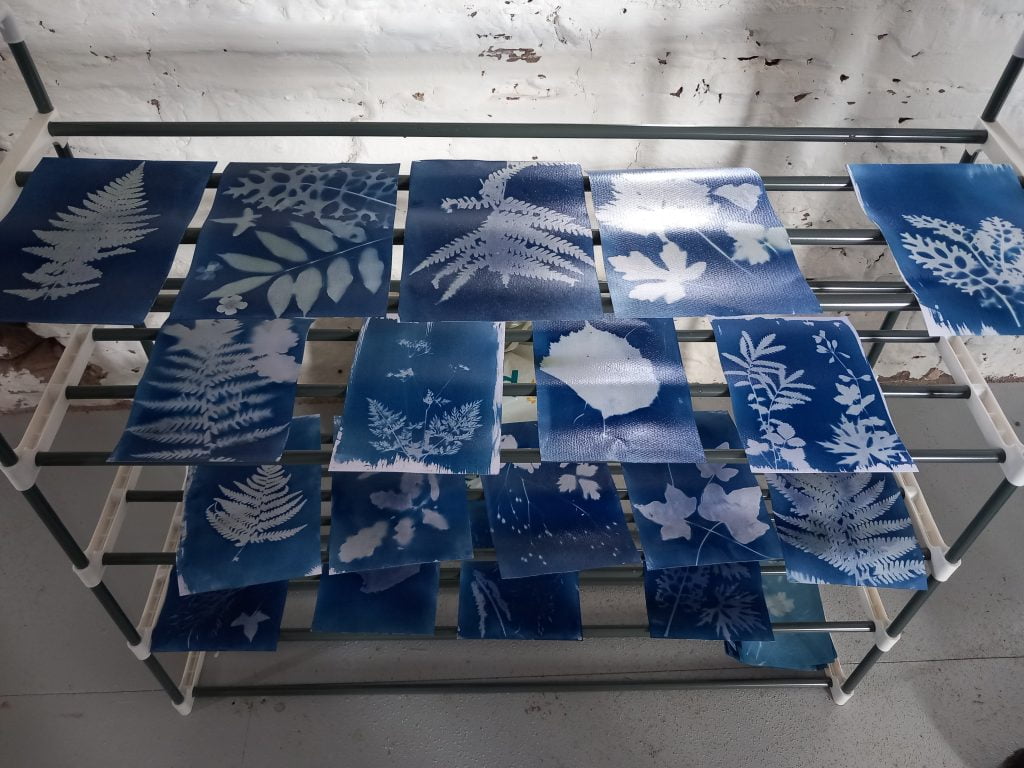
What is a Cyanotype?
The cyanotype technique was invented in 1841 by astronomer John Herschel but it was the work of botanist Anna Atkins who secured the place of cyanotypes in the creation of botanical imagery.
Her book ‘Photographs of British Algae: Cyanotype Impressions’, comprises of 424 cyanotypes, also known as “shadowgraphs”. These beautiful volumes, published over ten years from 1843, are recognised as the first ever photographically illustrated books.
Cyanotypes or ‘sun prints’ are created through an historical alternative photographic process that results in a cyan-blue ‘print.’
A mixture of iron compounds is applied to paper, which when exposed to UV light and washed in water, oxidises to create a range of Prussian blues.
The resultant image is influenced by the intensity of the light, the material and toners used, and the objects that create a negative image on the surface.
The perfect activity for the group at Flora Cultura. But how to make it happen? Well, Director Rashid’s sister, Olwynne, is a cyanotype artist (www.flaxandfeatherdesigns.com) and she was very excited to run a workshop, but Covid hit her family, so instead she gave Rashid a shopping list and a ‘how to’ guide and away he went … Feverfew, ferns and cow parsley were the stars, and everyone created the most amazing artworks inspired by some very exciting foraging!